BYD, as predicted, is widening its plug-in hybrid range, with the addition of the Seal 6 DM-i mid-size saloon and estate models, launched alongside the bigger Seal U DM-I SUV.
Design and interior
The Seal 6 DM-i, as it’s badged on the boot, is basically a smaller saloon and estate plug-in hybrid version of its sleek range-topping Seal EV saloon. And unlike the Seal U SUV, the Seal 6 looks like a scaled-down version of the range-topping saloon. Like its biggest brother, the Seal 6’s design is inspired by the ocean, with its front-end design mixing flowing shapes with sharper lines in the lower bumper for a sporty, dynamic look. This BYD’s ‘face’ is completed by the distinctive, crystal-style LED headlights that are standard on all versions of the car.
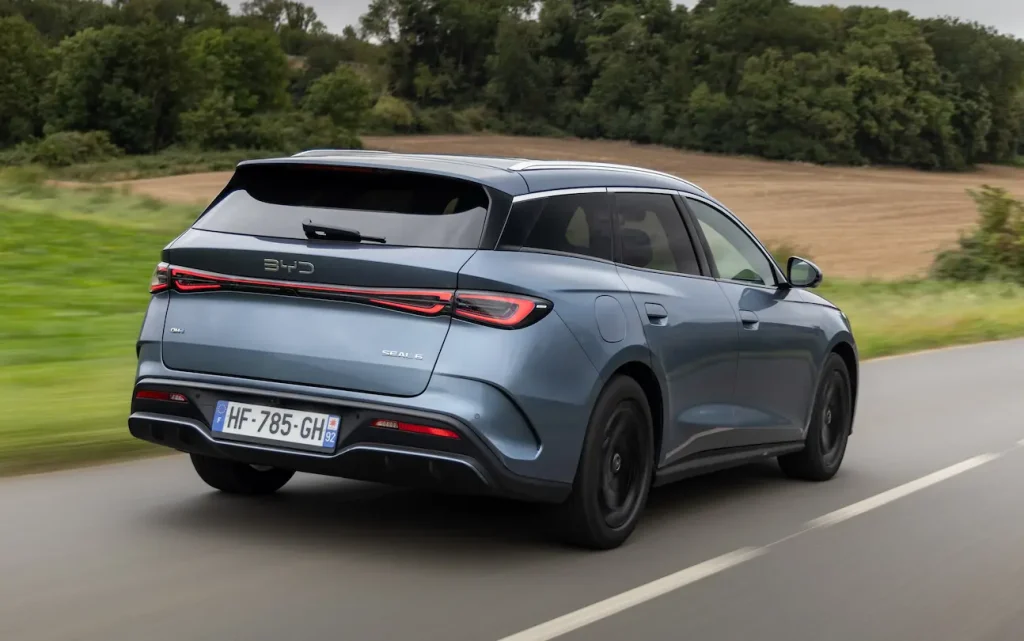
Along the sides, sculpted dual waistlines accent the Seal 6’s sleek profile, helped by big wheels up to 18in in size. Then, at the rear, the Seal 6 features the same high-set LED matrix taillights, that have a smoked finish.
Most attractive in our opinion, and expected best-seller of the two bodystyles available, is the Touring estate. It has an extended curvy roofline, upswept rear windows, and small, but upright rear screen. It is not just about the good looks of BYD’s first wagon in Europe – the Touring has a sizeable 500 litres of flexible load space, up to the level of the parcel shelf (almost a match for the 510 litres of the higher-segment Skoda Superb PHEV), and 675 litres if you load beyond it. Fold the 40:60 split-fold seat down, and the extended boot capacity is an impressive 1,535 litres – although the rear seats don’t fold totally flat. Accessing the Touring’s load bay is easy too, as a power tailgate, standard on all versions, can be remotely activated via the key fob.
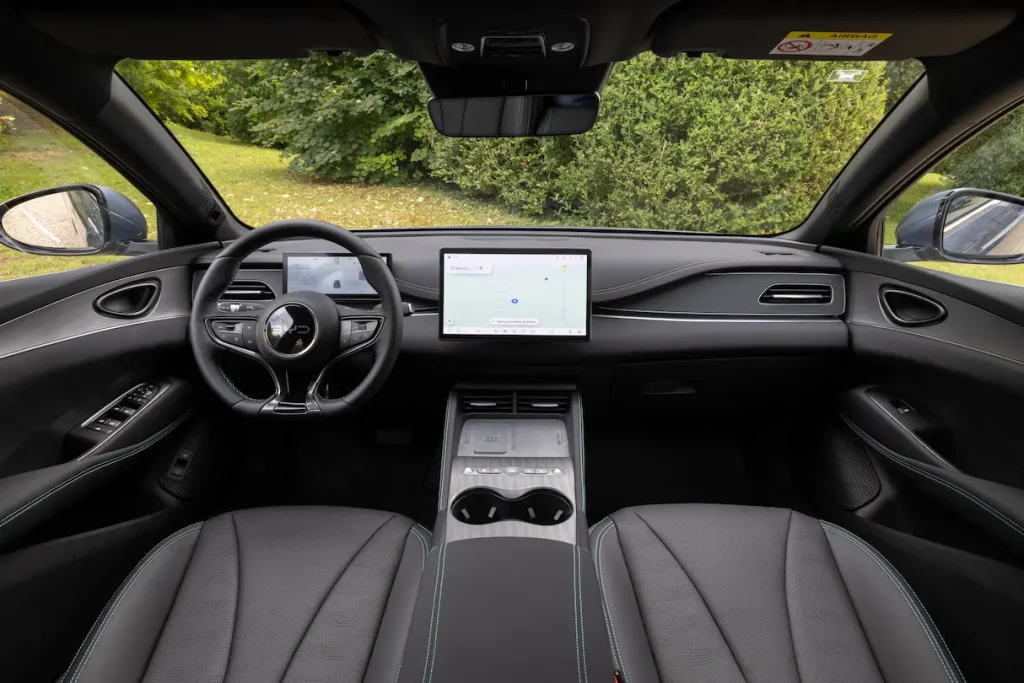
There are three Seal 6 versions available: Boost, Comfort Lite, and Comfort. Interior specifications are largely the same, so think vegan leather trim, power adjustable front seats, and a 12.8in infotainment screen, which unusually for a BYD, doesn’t rotate on the Comfort Lite-spec car we tested. You’ll apparently need the range-topping Comfort for the larger 15.6in screen that does rotate! The infotainment works as before, but we still wish for some physical controls for the heating, and now the lights – and we wish the icons were bigger. Still, there’s impressive storage in the centre console, plus plenty of charging points for phones.
Overall, we felt the Seal 6’s interior didn’t feel as special as the Atto 2 that we’ve also recently driven. The front seats are supportive, the driving position is comfortable, and there’s decent legroom front and rear, plus in the back there’s the bonus of a completely flat floor.
Performance and drive
It might look quite generic on the outside, but like the Seal U DMi, the Seal 6 is quite clever underneath – and feels more like a powerful EV, in ‘EV’ mode. In ‘hybrid’ mode, this BYD drives largely the same, although the humming from the petrol engine gets annoying when it comes in, or when the car runs out of electricity.
Our Comfort Lite equipment grade Seal 6 had an Atkinson-cycle, 98hp 1.5-litre naturally aspirated petrol engine, plus a 19kWh blade battery and 160kW electric motor. With the petrol engine powering either the front wheels or electric motor, the overall figures are 209hp, 300Nm, up to 62 miles of EV range, and a 9% company car tax BIK figure. Considering the power, 0-62 acceleration in 8.5 seconds is merely adequate. Choose the entry-level Boost, and that comes with a smaller 10kWh battery, 181hp, and 31 miles of EV range.
When the Seal 6’s battery needs charging, fast speeds of up to 150kW are possible on the bigger battery versions, which compares well with rivals, and means 30-100% charges will take over half an hour.
On the road, this BYD’s acceleration is best described as smooth, and EV-like. However, push the accelerator to the floor, and the engine will smoothly, but noisily kick in. Which, along with wind noise around the wing mirrors, spoils the overall refined feel to this BYD.
Along with ‘EV’ and ‘hybrid’, there are ‘sport’, ‘normal’, and ‘eco’ drive modes. However, we struggled to notice any difference between these modes make to the drive, apart from ‘sport’, which sharpens up the throttle.
Apart from the acceleration, and wind noise, the only other disappointments about the Seal 6 are an unsettled ride – despite the modest 18in wheels fitted to the Comfort Lite we had – and light steering, which is almost totally devoid of feel.
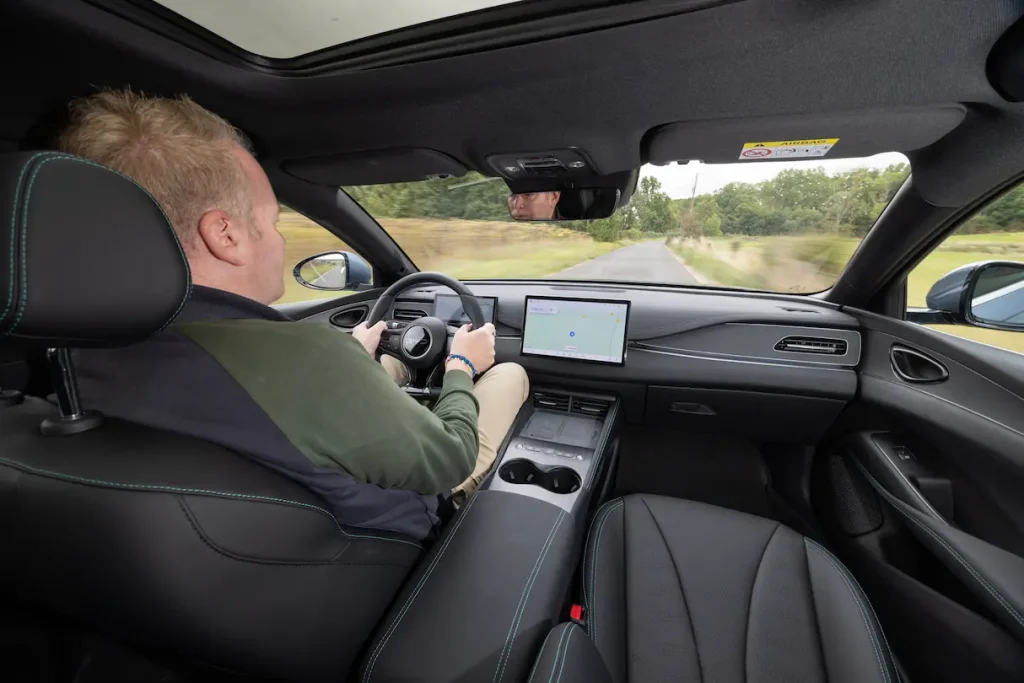
Whilst it’s not that much fun to drive, there’s no doubting the Seal 6’s decent EV range, and it is going to be affordable, with prices expected to range from £33,000 to £38,000, and all versions well-equipped and well-made. Although, like other PHEVs, future changes in taxation might make the Seal EV a more attractive fleet option.
Positive: Decent EV-only range, impressive interior refinement, well-equipped, affordably priced.
Negative: Not much fun to drive, unsettled ride, derivative exterior and interior styling, tiny rear window.
Standard equipment: Metallic paint, LED headlights, tail lights and daytime-running lights, 17in alloy wheels, automatic wipers, power adjustable front seats, power adjustable and folding side mirrors, 8.8in digital instrument panel,12.8in touchscreen infotainment system, four USB ports, rear parking sensors and rear-view camera, Vehicle-to-Load functionality.
Engines: Plug-in hybrid: 181hp, 209hp
Equipment grades: Boost, Comfort Lite, Comfort
Transmission: eCVT automatic
| Model | BYD Seal 6 DM-i Comfort Lite Touring |
| P11D | £37,000 (est) |
| Residual value | TBC |
| Depreciation | TBC |
| Fuel | TBC |
| Service, maintenance and repair | TBC |
| Cost per mile | TBC |
| Fuel consumption | 58.9mpg |
| CO2 (BIK%) | 34g/km (9%) |
| BIK 20/40% a month | TBC/TBC |
| Luggage capacity | 500 litres |
| Engine size/power | 1,499cc + electric motor/209hp |
| Score | 7/10 |