Let’s start by saying what this latest Arona isn’t. Yes, it may look a bit SUV-ish, in a pseudo urban warrior kind of fashion, but it’s more of a jacked-up Ibiza supermini than a big, brash bruiser. What’s more, rather than being driven by an electric powerplant, it is motivated by good old-fashioned petrol engines.
Yes, there are the requisite mid-life bumper tweaks, slimmer LED headlights, and reprofiled hexagonal grille, along with a new range of colours and alloy wheels. Be still my beating heart. Therefore, and as you may have guessed, already this latest Arona is effectively a spruced-up version of a motor that has been around since 2017.
Performance and drive
There is talk of an electrification programme in the pipeline, but this will be more along the lines of mild hybrid technology rather than any full EV varieties. For now, you can choose between 1.0-litre three-cylinder engines or a punchier 1.5-litre four-cylinder motor, which comes with a seven-speed DSG twin clutch automatic gearbox as standard. While the lower powered, 95hp cars make do with a six-speed manual, the 115hp models offer a choice of six-speed manual or a seven-speed auto. In a classic case of ‘you get what you pay for’, the 1.5-litre four-cylinder car is infinitely quicker, smoother and quieter than the rather bombastic three-cylinder models, although there are folk, mainly thrash metal fans, who still think the sound of a raging triple-cylinder cacophony constitutes a ‘sporty character’.
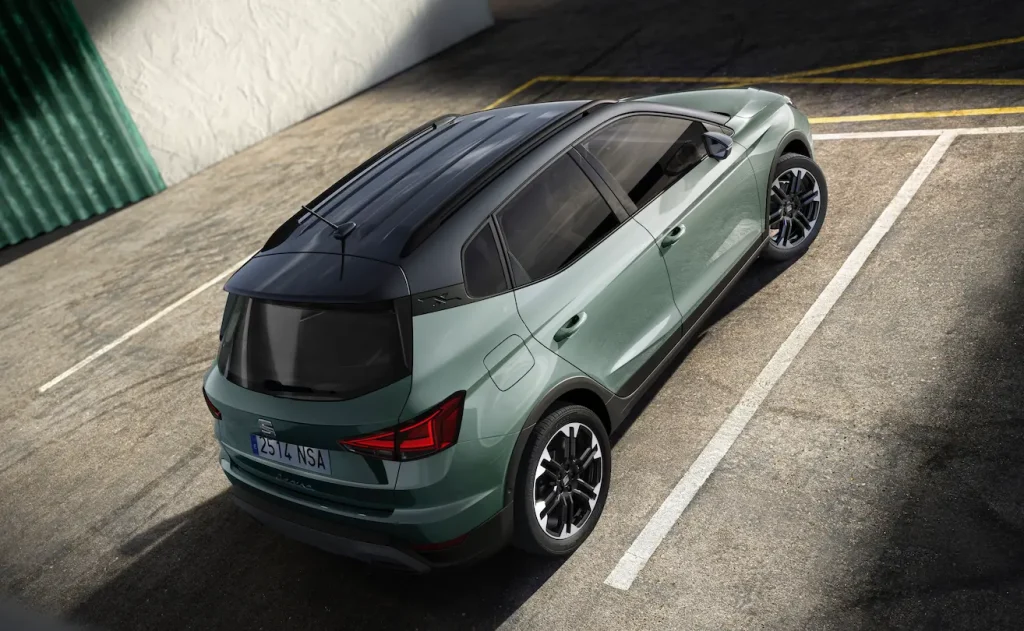
Speaking of sporty, the Arona is one of the more fun cars to drive in its class. It is in its element when tackling fast, twisting B-roads, as there’s loads of grip to exploit, while the light, precise steering and minimal body-roll make a mockery of the rather mumsy, school-run-special looks. That being said, your passengers may question whether Seat should have traded a degree of cornering ability in favour of some additional comfort, especially if you opt for an FR Sport model, which comes on sports suspension and large alloy wheels. In this guise, lumps and bumps are reasonably subdued acoustically, but things can feel a wee bit twitchy, with a fair amount of restlessness emanating from the rear axle when driving over chunkier surfaces.
Interior and technology
Inside, things have been given a bit of a lick and a promise, so everything will look familiar to any existing Arona owners. Positively, all the controls remain sweetly weighted and work with slick precision and although some of the plastics aren’t exactly premium, everything feels well screwed together. The dash has a straightforward layout, including the traditional bullseye air vents and a modestly sized touchscreen, which thankfully isn’t anywhere near as distracting as many more complex set-ups. We can only assume the lack of development budget has meant menu-obsessed millennials haven’t been involved, and consequently you still get a separate panel with intuitive rotary climate controls.
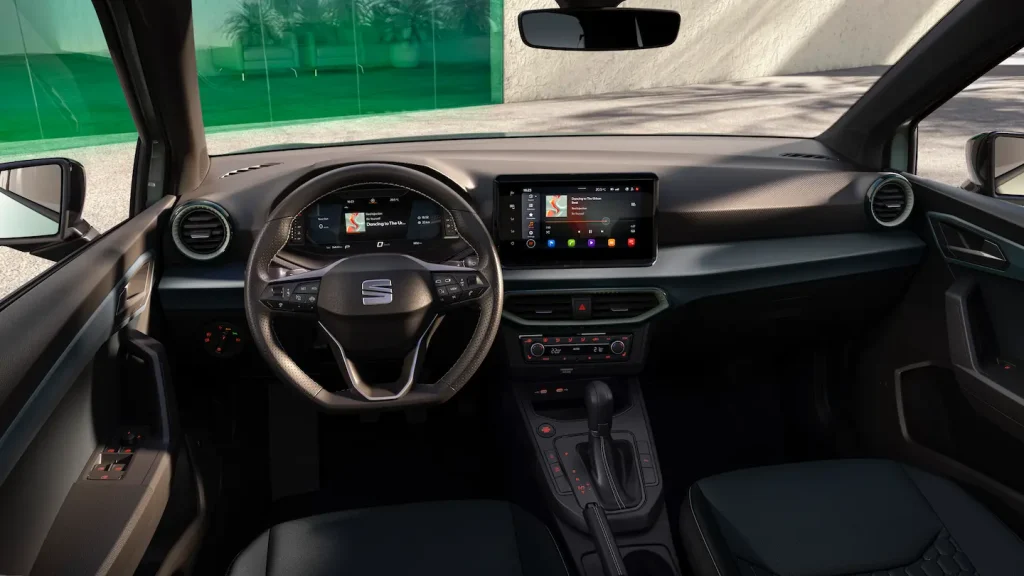
Given its supermini roots there is a surprisingly airiness up front and although legroom in the back seats is a bit on the tight side, child seat dwellers and iPad toddlers will not find this too much of an issue. There’s also a generous 400-litre boot, which should let you squeeze in a baby buggy plus a mid-week food shop top-up.
Oddly, Seat has managed to enhance the Arona’s credentials by doing very little. Or maybe it’s a case of its latest rivals not being quite so great as they purport to be. Obviously, increasingly punitive BIK implications for petrol cars have taken the edge off some of the Arona’s fleet appeal, but it remains an easy car to live with and an impressively accomplished jack of all trades.
Positive: Decent equipment levels, refined four-cylinder petrol engine, airy and spacious for its size.
Negative: FR spec is on the firm side, thrashy three-cylinder engines
Standard equipment: 16in alloy wheels, air conditioning, electrically adjustable door mirrors, electric front and rear windows, rear parking sensors, DAB, Bluetooth audio streaming with hands-free system, USB type C sockets, wireless Apple Carplay, Android Auto with USB type C cable for Apple and Android devices, 8.25in infotainment touchscreen, split folding rear seats (60/40), attention and drowsiness assist, proactive pedestrian and cyclist protection, lane keep assist, forward collision warning and autonomous emergency braking, dynamic road sign display, electronic stability control.
Engines: Petrol: 95hp 1.0, 115hp 1.0, 150hp 1.5
Equipment grades: SE, SE Technology, FR Sport
Transmissions: Six-speed manual, seven-speed automatic
| Model | Seat Arona FR 1.0 TSI 115 DSG Auto7 |
| P11D | £28,115 |
| Residual value | TBC |
| Depreciation | TBC |
| Fuel | TBC |
| Service, maintenance and repair | TBC |
| Cost per mile | TBC |
| Fuel consumption | 42.8mpg |
| CO2 (BIK%) | 126g/km (31%) |
| BIK 20/40% a month | £145/£291 |
| Luggage capacity | 400 litres |
| Engine size/power | 999cc/115hp |
| Score | 7/10 |