BYD Dolphin Surf
2025, as we anticipated, has already proved to be the year of the affordable small EV in fleet, with recent launches including the Citroen E-C3, Hyundai Inster, and the current Car of the Year, and now Business Car of the Year, the Renault 5 E-Tech. Now, BYD is getting involved, with the new Dolphin Surf, our Best Value Car of 2025.
Outside, the sharp, standard LED lights and angles almost give the Dolphin Surf baby Lamborghini Urus vibes, with the angular look continuing to the front airdam. There is a distinctive roof spoiler, upswept window line, short overhangs, and sharp lower detailing at the bottom of the doors.
Inside, despite the Dolphin Surf being less than four metres long, interior space impresses – with more rear kneeroom than the similarly-sized 5 E-Tech. Although, the headroom doesn’t feel as generous as with our Business Car of the Year, and more than two adults in the back would struggle.
The interior is quite plasticky, but it doesn’t feel any worse than rivals – in fact build quality is equal to many. Front interior storage feels more limited than with the likes of the E-C3 and Inster thanks to the raised centre console, although the wireless phone charging that is included on some models is welcome. The 308-litre boot might be bigger than rivals, but its odd shape affects its practicality.
It might be smaller than other BYDs, but the Dolphin Surf shares the same Blade Battery, which is known for its safety and durability. It is also built on the company’s e-Platform 3.0 architecture. This platform enables the vehicle to accommodate a variety of battery packs, and it also incorporates BYD’s ‘eight-in-one’ electric powertrain.
The Dolphin Surf is available with the choice of two battery options – a 30kWh battery for the entry-level Active, and the bigger 43.2kWh battery that we tried in the expected fleet best-seller, the Boost, and the range-topping Comfort equipment grade we focus on here. Choose the Active, and because of its small battery, a 10-80% charge takes half an hour, at a maximum charging speed of 65kW. Choose the Boost or Comfort, and rapid 85kW charge speeds are possible, meaning the same battery percentage charge is possible at the same time. On the road, the Dolphin Surf is probably best suited to urban driving. The first thing we noticed about the model is its comfortable and composed ride, swallowing up all but the worst London urban roads could throw at it. This BYD is also easy to drive, and with 154hp, the performance was perky enough to not be embarrassed on faster roads and motorways.
Only the Renault is more expensive than the BYD, which has the longest range behind the Hyundai. The Dolphin Surf has the second highest fuel cost, but the best residuals along with the Citroen and 5 E-Tech, although the Hyundai pips it to the highest depreciation figure. Still, the BYD finishes in last place here, not helped by high SMR costs.
| Model | BYD Dolphin Surf Comfort 43.2kWh |
| P11D | £23,950 |
| CO2 (tax) | 0g/km (3%) |
| BIK 20/40% a month | £11/£23 |
| Range | 200 miles |
| National Insurance | £99 |
| First year VED | £10 |
| Subsequent VED | £195 |
| Battery size/power | 43.2kWh/154hp |
| AFR | 8p |
| Residual value | 42% |
| Depreciation | £13,868 |
| Fuel costs | £3,457 |
| SMR | £2,410 |
| Cost per mile | 32.89p |
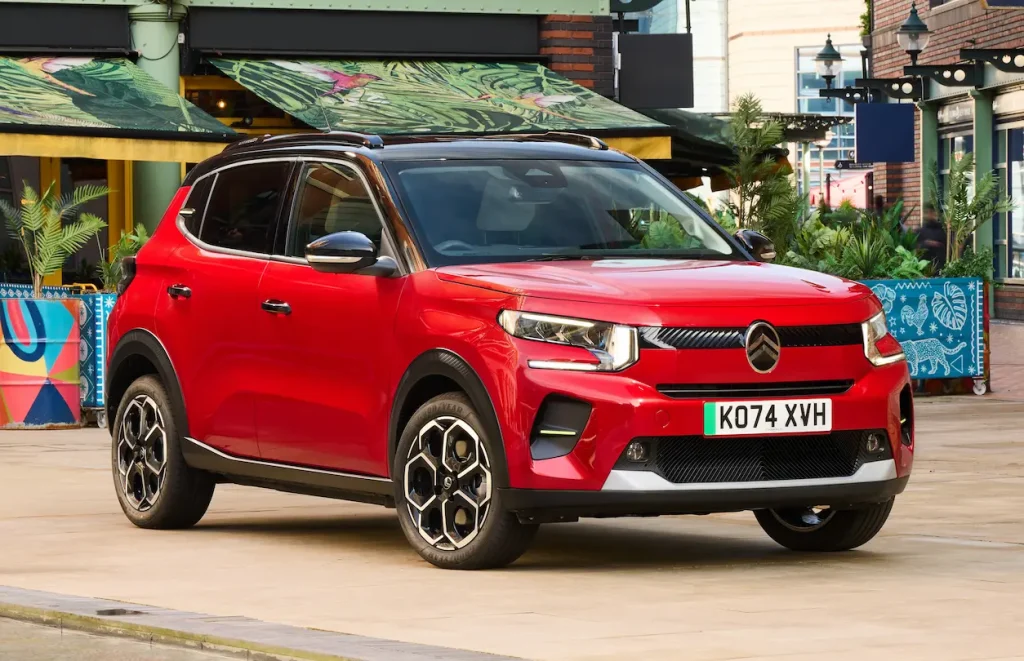
Citroen E-C3
Considering the price, the E-C3 continues to impress us as to what a good choice it is. The ‘SUV-style’ design equals more interior space, and the taller stance, with the front and rear design shows off the new and distinctive Citroen family look.
Despite the value price point of the E-C3, interior materials with our range-topping Max-spec car (£1,700 more expensive than the entry-level Plus equipment grade) don’t feel cheap. Citroen claims the extra height of the E-C3 has boosted legroom, thanks to the angle of the seats, and it is fair to say that both leg and headroom for back seat passengers are good for a supermini.
The Citroen is almost the cheapest to buy here, has low National Insurance, and depreciation figures, and its modest 199 mile range, puts it in joint third place behind the BYD and Hyundai. Elsewhere, the E-C3 is a mid-player, but because it’s so strong in many areas, it finishes second here, behind the Renault 5 E-Tech for the lowest cost per mile figure.
| Model | Citroen E-C3 Max 44kWh |
| P11D | £23,795 |
| CO2 (tax) | 0g/km (3%) |
| BIK 20/40% a month | £12/£24 |
| Range | 199 miles |
| National Insurance | £98 |
| First year VED | £10 |
| Subsequent VED | £195 |
| Battery size/power | 44kWh/113hp |
| AFR | 8p |
| Residual value | 42% |
| Depreciation | £13,822 |
| Fuel costs | £3,434 |
| SMR | £1,699 |
| Cost per mile | 31.59p |
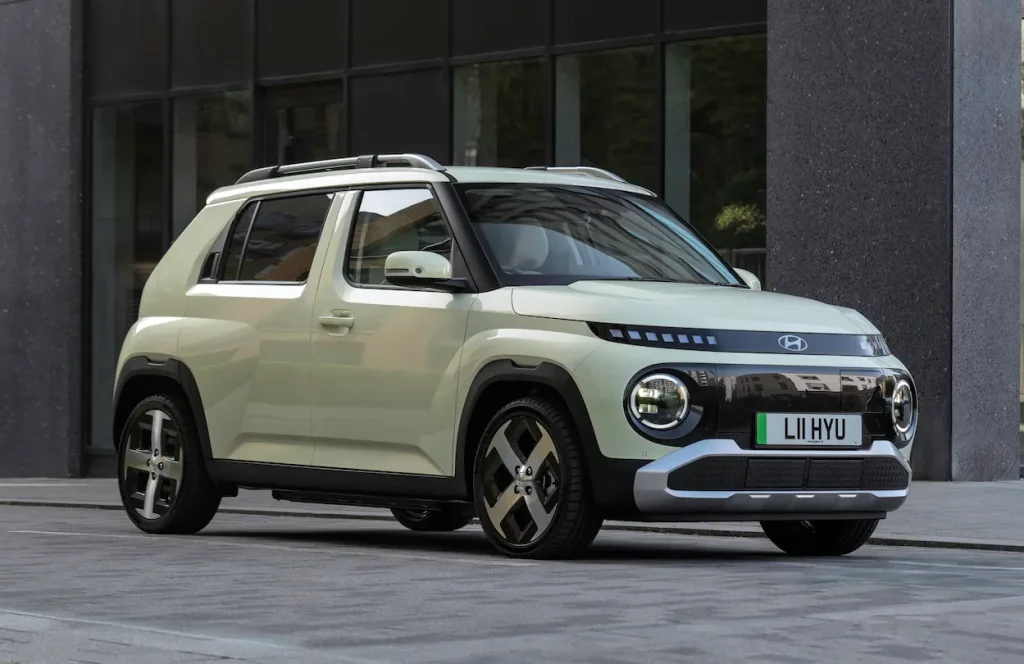
Hyundai Inster
The Inster is Hyundai’s first electric A-segment (city car) model designed specifically for the European market. It makes a strong first impression, with funky SUV-inspired exterior styling, and in our opinion, things only get better once you climb aboard. The interior space impresses – it feels the equal of cars one or two sizes up, although the 01 version featured here does without the funky interior colours and interior trim of the 02. There is also a deep boot, with up to 280 litres of space.
The Inster is available with two EV powertrain options – we’re looking at the 97hp motor and a 42kWh battery that’s only available with the entry-level 01 equipment grade. The Hyundai is a nippy performer around town and is more than adequate up to and including motorway speeds.
In entry-level 01 spec, at £23,505, it’s priced close to the Renault. The Inster depreciates the least – which bodes well for the future. Considering this, it’s not surprising it finishes in third place in this comparison, just behind the Citroen.
| Model | Hyundai Inster 01 42kWh |
| P11D | £23,505 |
| CO2 (tax) | 0g/km (3%) |
| BIK 20/40% a month | £12/£23 |
| Range | 203 miles |
| National Insurance | £97 |
| First year VED | £10 |
| Subsequent VED | £195 |
| Battery size/power | 42kWh/97hp |
| AFR | 8p |
| Residual value | 39% |
| Depreciation | £14,384 |
| Fuel costs | £3,194 |
| SMR | £1,541 |
| Cost per mile | 31.86p |
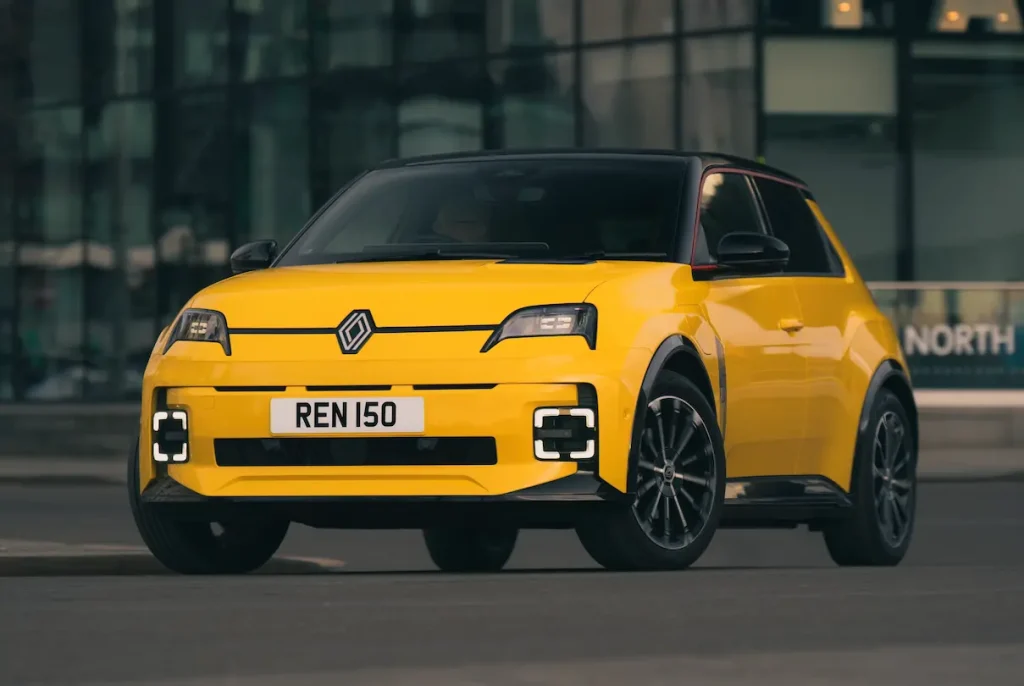
Renault 5 E-Tech
Launched this year, and now our Business Car of The Year 2025, the Renault 5 E-Tech can’t seem to stop winning awards! This is because, on top of looking fantastic, with a modern futuristic interior that feels well-made, the Renault is a great drive, and fantastic value for money. However, to stay competitive in this set, only the entry-level Evolution Urban Eange’ version is competitive here.
The 5 E-Tech range starts with the Evolution, which is powered by a 40kWh battery, and a 120hp electric motor. This is capable of a 0-62mph acceleration time of 9 seconds and has the smallest range here (just!), of 194 miles.
Considering its popularity currently, the fact that at 42%, this Renault’s residuals are the match of the BYD and Citroen here is interesting. The 5 E-Tech also boasts the lowest NI figure. With the lowest cost-per-mile figure of the set, helped by low depreciation, it is our overall winner.
| Model | Renault 5 E-Tech Evolution Urban Range 40kWh |
| P11D | £22,995 |
| CO2 (tax) | 0g/km (3%) |
| BIK 20/40% a month | £12/£23 |
| Range | 194 miles |
| National Insurance | £95 |
| First year VED | £10 |
| Subsequent VED | £195 |
| Battery size/power | 40kWh/120hp |
| AFR | 8p |
| Residual value | 42% |
| Depreciation | £13,264 |
| Fuel costs | £3,320 |
| SMR | £1,748 |
| Cost per mile | 30.55p |