5th Report: (More) impressive efficiency
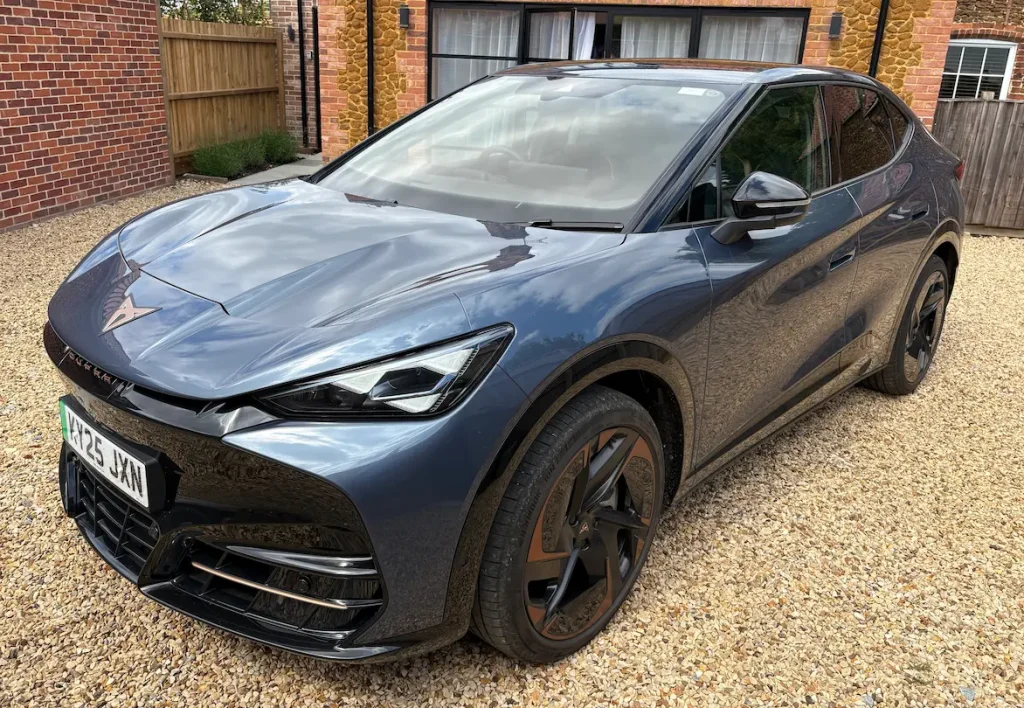
If KY25 JXN thought it was going to get an easy life with me following on from editor Martyn Collins’ custodianship, then it was very wrong.
The week after the car became mine, I used it to take me to the final round of the Formula E World Championship at London’s Excel exhibition centre as a guest of Nissan. Although I had charged up the Tavascan the night before and it showed 305 miles of range on the driver’s display screen, this 105-mile journey would be my first longish trip.
I also wanted to do the return journey without charging up – so, 210 miles from home and back again should have given me a 95-mile buffer on paper. Easy, but even though I am very experienced at driving electric cars, I always find it takes a bit of time to build confidence in a new EV and find out not just how efficient it is, but also whether I can rely on the predicted range display.
With pretty heavy Sunday midday traffic on the M25 progress was a little slow, but it did mean that the efficiency soared to 4.5 miles per kWh. I even had a chance to use the stop-and-go cruise control – again, I always find using these systems a little worrying for the first time, but it worked perfectly, of course. It was nice to arrive at the final round of the Formula E championship in an electric car for obvious reasons. Just like with EVs, the Formula E racers have improved enormously over the last five years, or so, giving better performance and longer ranges. While the race wasn’t a success for Cupra, it gave me a taste for this type of motorsport that I’d never experienced before.
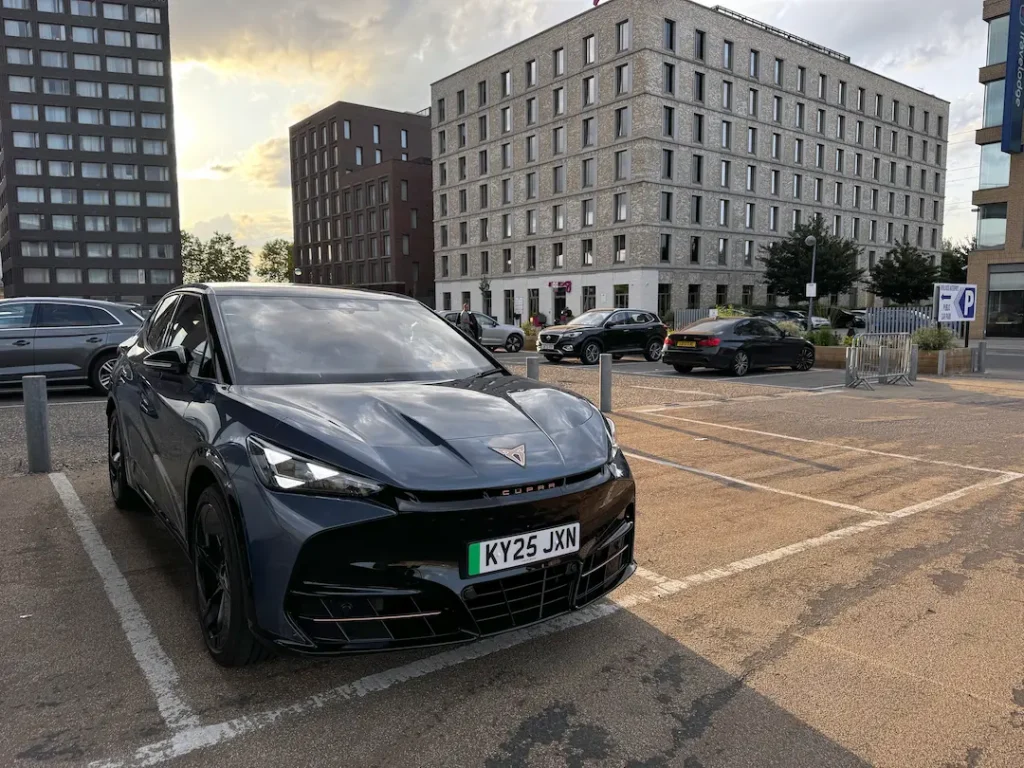
For the drive home on that late sunny Sunday evening, I decided to take the route that passed through central London, – as the crow flies, in other words – back to my home on the south coast. It was a relatively pain-free drive – the Tavascan is such a relaxing car to drive, and its adaptive dampers did well over some really terrible south London roads. The only annoyance was the rear visibility – I found myself constantly looking in the mirrors to look out for scooters and bicycles as the view out the back is pretty terrible. But that’s the price you pay for coupe styling, I guess. I managed to get home with 70 miles in the ‘tank’, so not the 95 that the maths implied, but still rather good.
A few days later, the Tavascan was pressed into service again to drive a prototype EV in Bedfordshire – another 200-mile round trip. This time, though, a faster journey on the M25 and M1 and hotter temperatures in the high-20s saw the efficiency plummet to 3.1 miles per kWh, forcing me to make a quick charge on my way home just for peace of mind. It was a pain-free charge, despite the 79p per kWh rate, but I am starting to realise that the Tavascan really does struggle to better 3.4 miles per kWh in normal driving, which I think is pretty disappointing.
In recent weeks the Tavascan has been used for more local trips. It’s a car I really do enjoy driving – there’s a lovely balance to the way it drives, with it proving to be quick and engaging, whilst always remaining very comfortable. In this respect, I think the Tavascan is one of the nicest VW Group EVs on sale, only bettered by the Skoda Enyaq. It has a nice, quality feel to it, too, and the infotainment system is a vast improvement on earlier VW efforts.
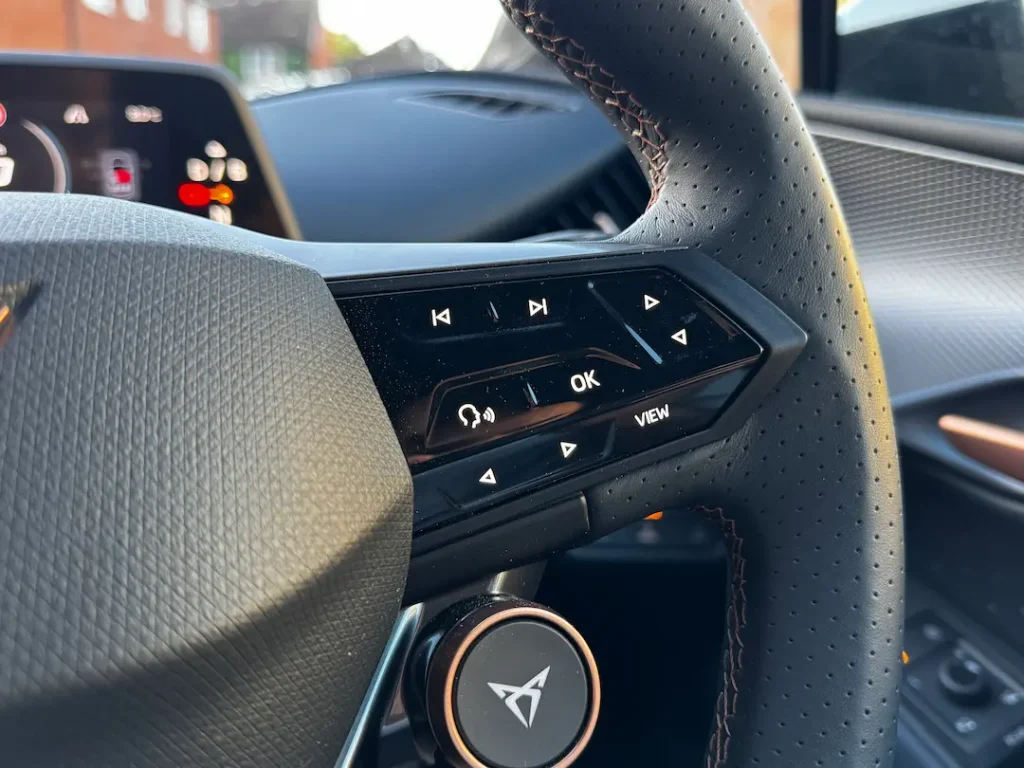
But there are some niggles that grate – the steering wheel buttons and the electric rear window switches. The steering wheel is a lovely thing to hold, with the separate driving mode and Cupra driving mode buttons being real highlights. But all the other buttons are on touch-sensitive panels on the spokes, and I’m finding it too easy to accidentally swipe these as I am turning the wheel. So, BBC Radio 4 can suddenly become 5 Live, which just won’t do!
Meanwhile, the rear window switch is a let-down. Just like on a Volkswagen ID.3, there are no separate switches for the rear windows. To control them, you have to press a touch-sensitive panel marked ‘Rear’ and then use the front window switches. This clear cost-cutting measure is a very frequent complaint amongst motoring journalists, but I’ve always thought the criticism was a little unwarranted – I mean, how often do you open the rear windows? But, living with the Tavascan, I can understand the gripe now, as it’s very easy to accidentally touch the ‘Rear’ button as you go to press the window switch when you want to wind down the driver’s window. It’s a small thing, I know, but I’m starting to think it shouldn’t be an issue in a car that costs £56,000.
| Model | Cupra Tavascan V2 77kWh |
| P11D price | £53,780 |
| As tested | £56,110 |
| Official range | 352 miles |
| Test consumption | 3.4 miles per/kWh |
| Mileage | 2,380 |
4th Report: All change
As phone calls go, it was a pretty good one. When editor Martyn Collins rang me to ask if I’d like to take over the running of Business Car’s Cupra Tavascan long-term test car, I didn’t have to ponder for very long.
As a freelance motoring journalist I get to test all sorts of cars for a variety of reasons, but I have to say that Cupra is a brand that has passed me by somewhat. Actually, that’s not true as I have followed how Volkswagen Group has turned a sporty model name into a fully fledged and distinctly upmarket brand within its stable with interest – and particularly what a success it has become in the UK. But apart from the Seat-derived Leon and Ateca models, I haven’t driven a proper standalone Cupra before, let alone a fully electric one.
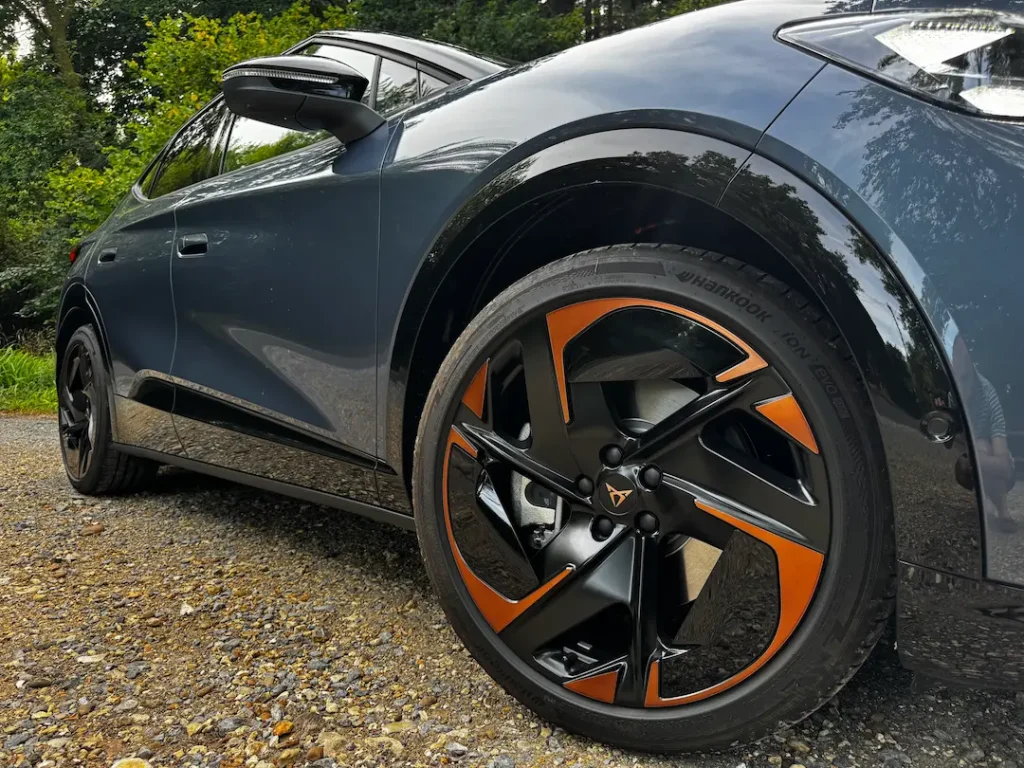
The Tavascan is the latest Cupra to arrive in the UK, and unlike some other models from the Spanish brand, it only comes with electric power. But, judging by the success Cupra has had with the Born, I doubt that’s going to be an issue. Having said that, even though the Tavascan is new on the scene, I haven’t seen one on the road yet, which could explain why it gets a few looks from other drivers when I’ve been waiting at traffic lights. My neighbour, who’s a recent convert to the Born, took an immediate interest the day after I picked up the Tavascan from Martyn, judging by my Ring doorbell.
For the past couple of weeks, the Tavascan has just been put through some pretty mundane tasks like jaunts to the supermarket. I have more thrilling trips planned, but even in the drudgery of everyday life the Tavascan’s character is beginning to shine through. I’m not quite sure how Cupra has done it, but the Tavascan feels distinctly different from its Volkswagen ID.5 and Skoda Enyaq Coupe sisters. Not just when it comes to interior design – which one passenger described as ‘crazy’ – but also in how it drives; there’s a bit more of a bite to the way the Tavascan goes around corners, for instance, which is one of the brand’s main characteristics after all.
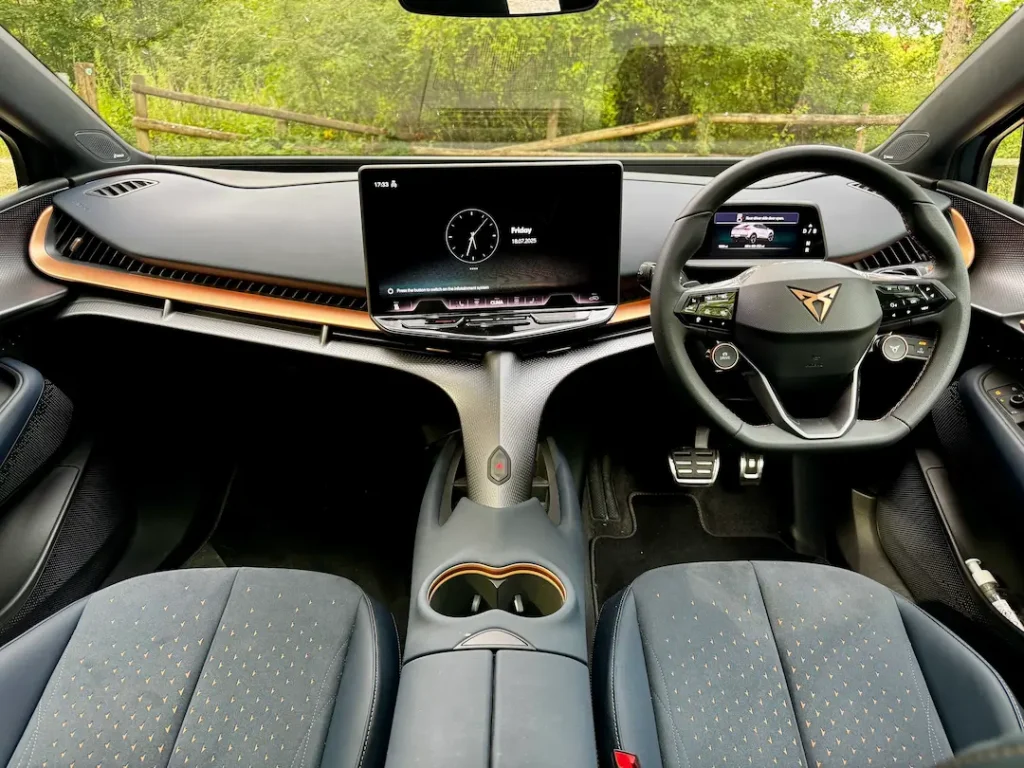
I’m already a fan of the blue seats that, rather intriguingly, are trimmed in a special recycled material called ‘Seaqual Yarn’, the large copper-coloured alloy wheels, and how the infotainment system seems to be easier to use than the equivalent Volkswagen offering. Over the next few weeks I am hoping the car’s efficiency improves, as it is currently rigidly sticking to 3.0 miles per kWh, which is a little disappointing. I’m looking forward to spending some time with it.
| Model | Cupra Tavascan V2 77kWh |
| P11D price | £53,780 |
| As tested | £56,110 |
| Official range | 352 miles |
| Test consumption | 3.0 miles per/kWh |
| Mileage | 1,980 |
3rd Report: Long distance – no problem!
By Martyn Collins
It has been a quieter month for the Tavascan after last report’s family holiday, but that hasn’t stopped us winding on over 300 miles.
First was a 216-mile round trip to a very wet Southampton for a car launch. Fully charged, this was the first time the Cupra predicted it had over 300 miles of range, with 306 miles showing on the dashboard as I left home very early on the day.
Despite the big range, adaptive cruise control was my friend on this trip, keeping the drive generally smooth and efficient. Although, even if you adjusted the distance between the Tavascan and the car in front, it seemed too keen to shed speed too quickly! As such, I found myself constantly adjusting the settings on the route. The Cupra isn’t on its own here, as I’ve found the same with other Volkswagen Group products.
Also, considering how dry the weather has been recently, when the rain came down, I appreciated how secure this Cupra felt on the motorway with all the standing water on the carriageway.
Two hours later, we rolled into the event car park with just under 200 miles showing on the range, and me feeling more relaxed than I was expecting, thanks to the Tavascan’s efficiency, as I was sure I would have enough charge to make it back home to Herts. Plus it had been a comfortable and refined drive.
Apart from the wet driving conditions and traffic, the trip home was pleasingly unremarkable, thanks again to the adaptive cruise control. The still-impressive Sennheiser sound system remained punchy enough to keep me awake.
In fact, it’s the Cupra’s efficiency that really makes it the perfect EV choice for longer trips. Despite some home charger cable issues, that have meant that the Cupra hasn’t been always fully charged this month, I’ve had enough confidence in the range shown on the display to make trips without the need to make use of the public charging network.
Most recently, I needed to travel to a colleague’s home address in Peterborough, to get a lift for a work event. After trips to Bedford and Heathrow, and not being able to charge for a couple of week or so, the result was 160 miles range. After checking the maps, I worked out it was an 80-mile trip each way, and with a couple of hours on my Ohme charge, this increased the range to 199 miles. Less than I’d have liked, but more than enough to get there, and home without a charge (fingers crossed!).
Any range anxiety worries were quickly extinguished, with adaptive cruise control taking the strain again, leaving me to appreciate the Cupra’s comfortable, spacious, and attractive cabin, with the Sennheiser sound system keeping me entertained. Just over an hour later, I was parked outside my colleague’s house, with 120 miles range still showing – more than enough to get home,which it did!
After all the miles and long trips covered, I can safely say the Tavascan isn’t quite perfect. The curvy exterior styling still looks sharp, but all-round visibility isn’t great. In fact, it’s worse at the back of the Cupra, and I’m constantly grateful for the rear camera.
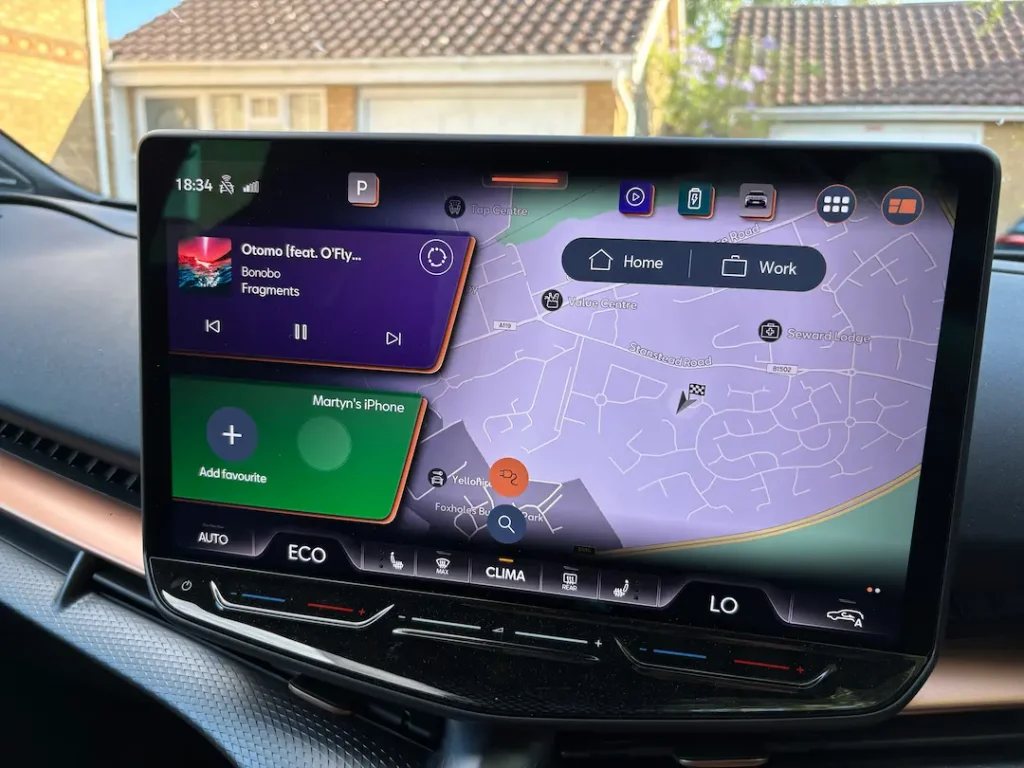
Then, there’s the Cupra’s 13in infotainment screen. It seems the current trend is for manufacturers to fit the biggest screen they can, but I wonder if Cupra could have got away with fitting a smaller one? In my opinion there’s plenty of wasted space. I’m also not a fan of the typeface and design of the maps themselves – which I feel lets down the generally premium feel of the Cupra’s interior.
Another irk in the Tavascan’s interior are the twin cupholders in the raised centre console – as in my view, they’re not quite big enough for the task!
This on top of previously mentioned issues – the Tavascan’s overactive safety systems, and the haptic controls on the multi-function steering wheel!

| Model | Cupra Tavascan V2 77kWh |
| P11D price | £53,780 |
| As tested | £56,110 |
| Official range | 352 miles |
| Test consumption | 3.6 miles per/kWh |
| Mileage | 1,810 |
2nd Report: Holiday substitute
By Martyn Collins
Late half term, with children to keep busy, it seemed the perfect opportunity to get away. A plan was hatched, and a holiday cottage was booked in Kings Lynn, so we could explore West Norfolk. Then, our own ICE-powered family car put a spanner in the works, with drivetrain issues, just days before the off.
With our own car out of action, the most obvious, most practical solution, was the Business Car long-term Cupra Tavascan. The only worry, as always, was being at the mercy of the UK’s inconsistent charging network. Still, based on previous experience, and after checking maps, it seemed the area was well-served for electric car charging.
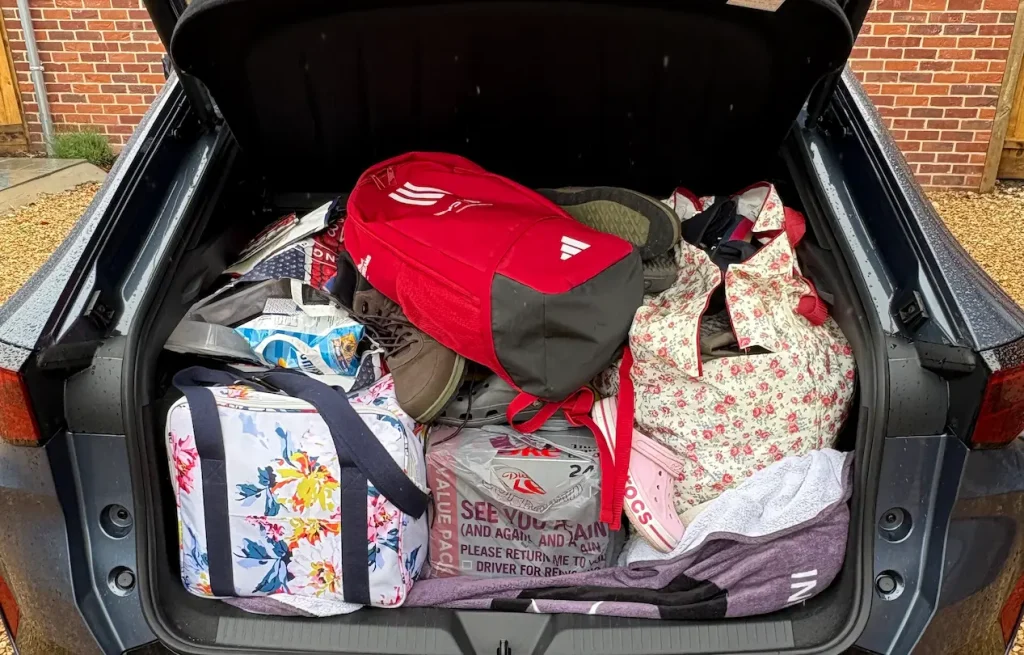
Again, I was grateful for the Tavascan’s practically-shaped 540-litre boot, which swallowed all our luggage, food and drink, and even our dog’s sleeping crate, for our four days away. Although, I had to unclip the parcel shelf, due to the height of all our luggage.
Leaving home fully charged equalled roughly 299 miles of range (official WLTP range is 352 miles). Two hours later, after almost 100 miles on mostly slow A-roads, in driving rain (that will teach me to wash it!), we arrived at our lunch stop with 188 miles of range left. Even with two adults, two children, and a dog, the Cupra impressed again at what a comfortable and efficient long-distance EV it is. The supportive, high-back sports seats add to the reasonably comfortable ride in the front – despite the 21in wheels. The standard Sennheiser stereo was punchy enough to keep us entertained, while listening to various family playlists.
After lunch at Old Hunstanton Beach, and more food shopping, it was time to find our cottage. Access was via a slim drive and gate. The Cupra’s all-round visibility is so-so at best, but the parking camera and sensors really helped here. I was also grateful of the Tavascan’s decent turning circle, in the compact parking area.
Day two of our Norfolk adventure, and our Cupra’s navigation was set again to Old Hunstanton beach, to make the most of the sun, which had happily made an appearance. After chasing the sea (harder than it sounds with the tide out!), we ended the day with a cross-country trip to Brancaster, for dinner. This was probably my most enjoyable trip in our Cupra to date. At national speed limits, on twisty roads, our Tavascan rewarded me with a tidy, smooth, and involving drive.
Day three, and after a trip to Sandringham to walk the dog, and with the range down to 80 miles, we decided to head into Kings Lynn for a look around, and a quick charge for the Cupra. In the end, we chose a bank of Instavolt chargers, in the middle of an out-of-town shopping centre. As promised, it was a painless rapid charge to 80%, taking around 30 minutes, equalling over 220 miles of range, and relieving me of just over £37 in the process. The rest of the day was spent exploring.
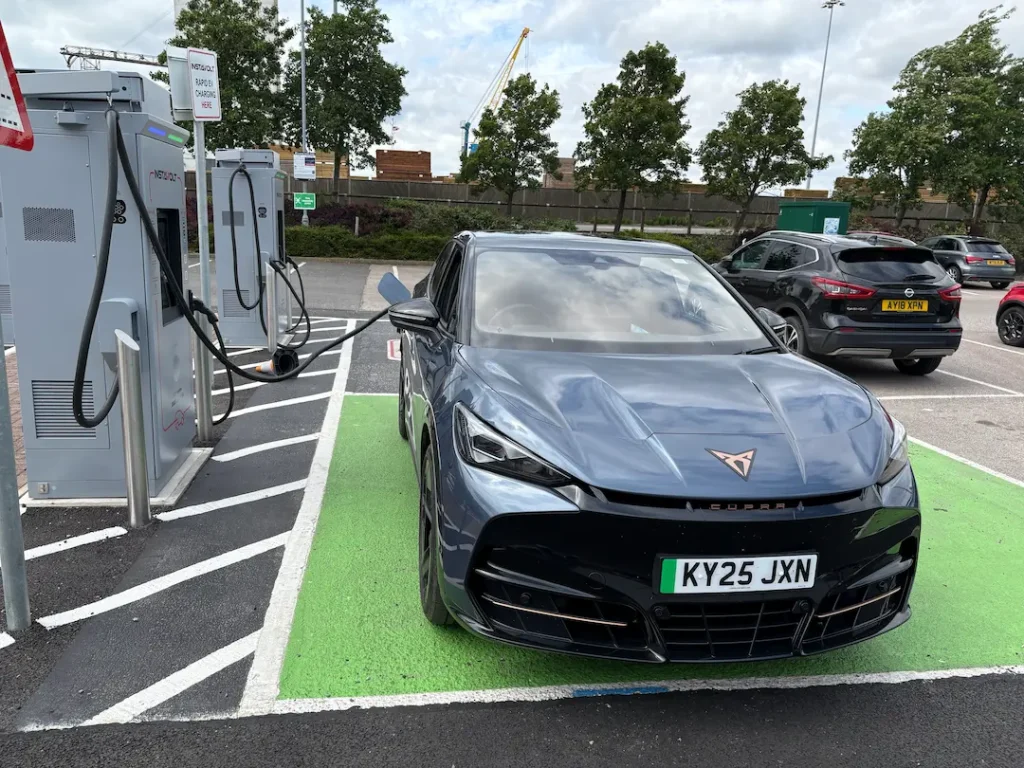
Day four, and it’s time to head for home, via one of my favourite towns on the East Suffolk coast – Southwold. As our route kind of took us past the Norwich Gridserve site, I took advantage of a rest, hot drink, and the Cupra received another top up to 80% – the last before home! This charge equalled 250 miles of range, and relieved me of another £37 in the process.
After a late lunch and some much-needed exercise for the dog, we headed for home, which proved to be another comfortable, efficient and uneventful drive – despite the Friday afternoon traffic! In fact, the Cupra still had 97 miles range when we got home, and had achieved 3.6 miles per kilowatt efficiency, impressive considering the Tavascan was well loaded.
The only issues were the Tavascan’s overactive safety systems, and the haptic controls on the multi-function steering wheel, that seem to have a mind of their own!
| Model | Cupra Tavascan V2 77kWh |
| P11D price | £53,780 |
| As tested | £56,110 |
| Official range | 352 miles |
| Test consumption | 3.6 miles per/kWh |
| Mileage | 1,550 |
1st Report: Comfortable, practical – but is it sporty?
By Martyn Collins
About two years ago, I ran our last Cupra EV, a Born. I had the car during the summer months, and enjoyed the sporty looks outside and in, with decent range, and a keen drive. Sadly, Pete Tullin, who took over the car in the depths of winter, didn’t have such a good time, but that was mainly down to the UK’s problematic charging network!
The UK charging network is supposedly improving all the time, and the Cupra brand has changed a lot since then. The Tavascan is its only coupe-SUV, and its only other EV. It certainly made an impact at the UK launch late last year, so we jumped at the chance of a long-term loan.
Anyway, after living with one of the Tavascan’s sisters – the Audi Q4 E-Tron Sportback – I felt I was best qualified to run this Cupra. We didn’t get the chance to spec this car, but the one thing we requested was V2 specification, as it’s best suited to fleet. However, the Tavascan Blue paint (£995), suits this Cupra’s curvy shape. Plus, despite moving into summer, the heated seats, part of the £1,335 Winter Pack, have still been welcome on cold, wet spring days.
It arrived just in time for my Easter break, which mostly revolved around house DIY, and running my children about to various activities to keep them busy. As part of the DIY, I was a frequent visitor to our local refuse centre. So, I’ve made full use of the Tavascan’s 540 litres of space with the rear seat folded. On top of the space, the Cupra’s boot is a practical shape – also great when I had to get my son’s bike from the repairers.
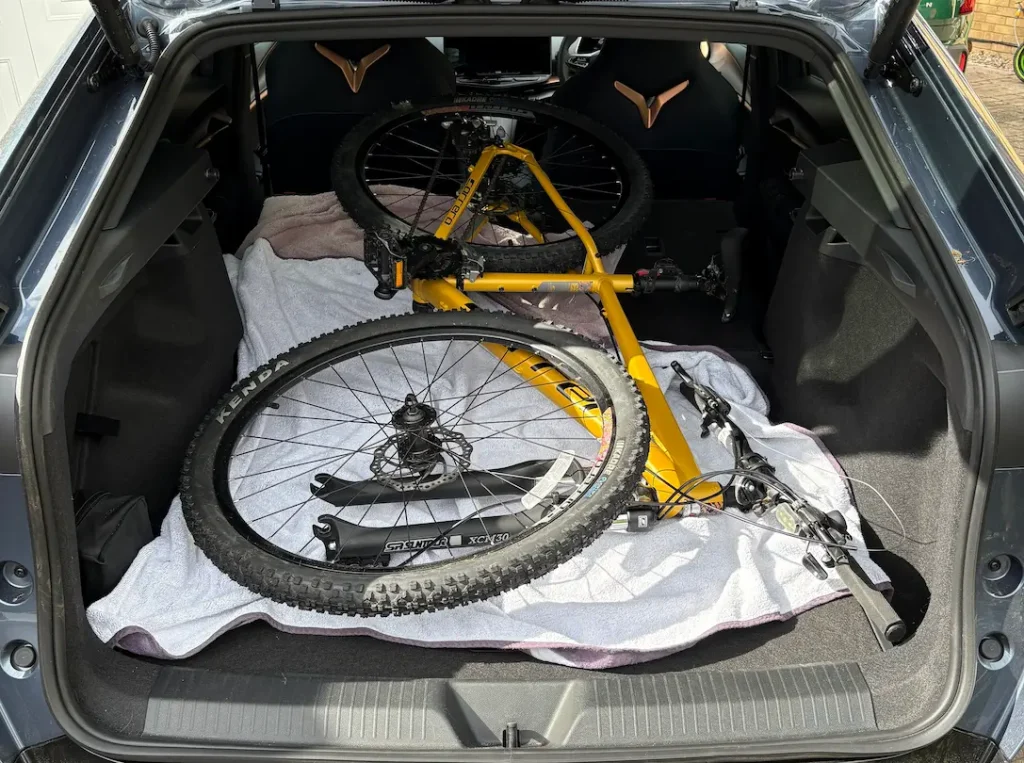
So, we established the Tavascan can do practicality, but does its sporty image come across in the drive – and most importantly, what’s the range like? The Cupra arrived almost fully charged and wasn’t plugged in for over two weeks, mostly because of its decent efficiency, and short trips. Drive-wise I wasn’t sure whether to be disappointed or impressed. Disappointed, because unlike the Born, this Cupra doesn’t add any extra sportiness and is a very similar driving experience to my previous Audi. But impressed that the ride on the standard 21in wheels, if anything is more comfortable and composed!
A 300+ mile round trip to Worcester over two days was the perfect excuse to get to know this Cupra better. Leaving home fully charged equalled nearly 290 miles of range (official WLTP figure is 352 miles). Three hours, and almost 160 miles of mostly motorway driving with cruise control later, I arrived at my overnight hotel in Malvern with 102 miles range left. Despite the big wheels, I think the Cupra is the more comfortable long-distance EV – the supportive, high-back sports seats adding to the refined motorway ride. The standard Sennheiser stereo was also punchy enough to keep me awake on the three-hour non-stop drive. The only interior disappointment was that the two central cup holders aren’t big enough to hold two bottles side by side. Efficiency also impressed, with the trip computer registering a 3.6mi/kWh figure, and there being enough range to get to the chargers at the event.
After five hours on a slow Monta charger, which relieved me of £25, the Tavascan’s range was showing 199 miles for the way home. I was slightly concerned after typing my address that the Cupra was asking for a charge before home, so drove particularly efficiently before hitting the motorway. Thankfully it changed its mind about charging before then, and I made it back to Herts three-hours later, with an even more impressive 3.8mi/kWh figure, 18% battery, and 56 miles range left.
| Model | Cupra Tavascan V2 77kWh |
| P11D price | £53,780 |
| As tested | £56,110 |
| Official range | 352 miles |
| Test consumption | 3.4 miles per/kWh |
| Mileage | 850 |
Standard equipment: 19in alloy wheels, heated electric and foldable mirrors, LED headlights with signature, electric tailgate with virtual pedal, dark tinted rear windows, anti-theft alarm system, navigation system, drive profile selection (Range, Comfort, Performance, Cupra, Individual), seven speakers, 5.3in Digital Cockpit with 15in central display infotainment system and Intelligent voice assist, wireless phone charger, three-zone Climatronic air conditioning, heated and leather-trimmed multi-function steering wheel with satellite buttons, front sports seats in cloth with manual height adjustment.
Options: Tavascan Blue paint (£995), Winter Pack (£1,335)